
/ Roof Cleaning
Roof Cleaning Sunshine Coast
WETR provides roof cleaning Sunshine Coast homeowners can trust with tile and metal roofs. We soft wash tiles with no high pressure, use a gentler low-pressure method on metal, and treat the lichen, mould and algae that keep coming back in our humid coastal climate.
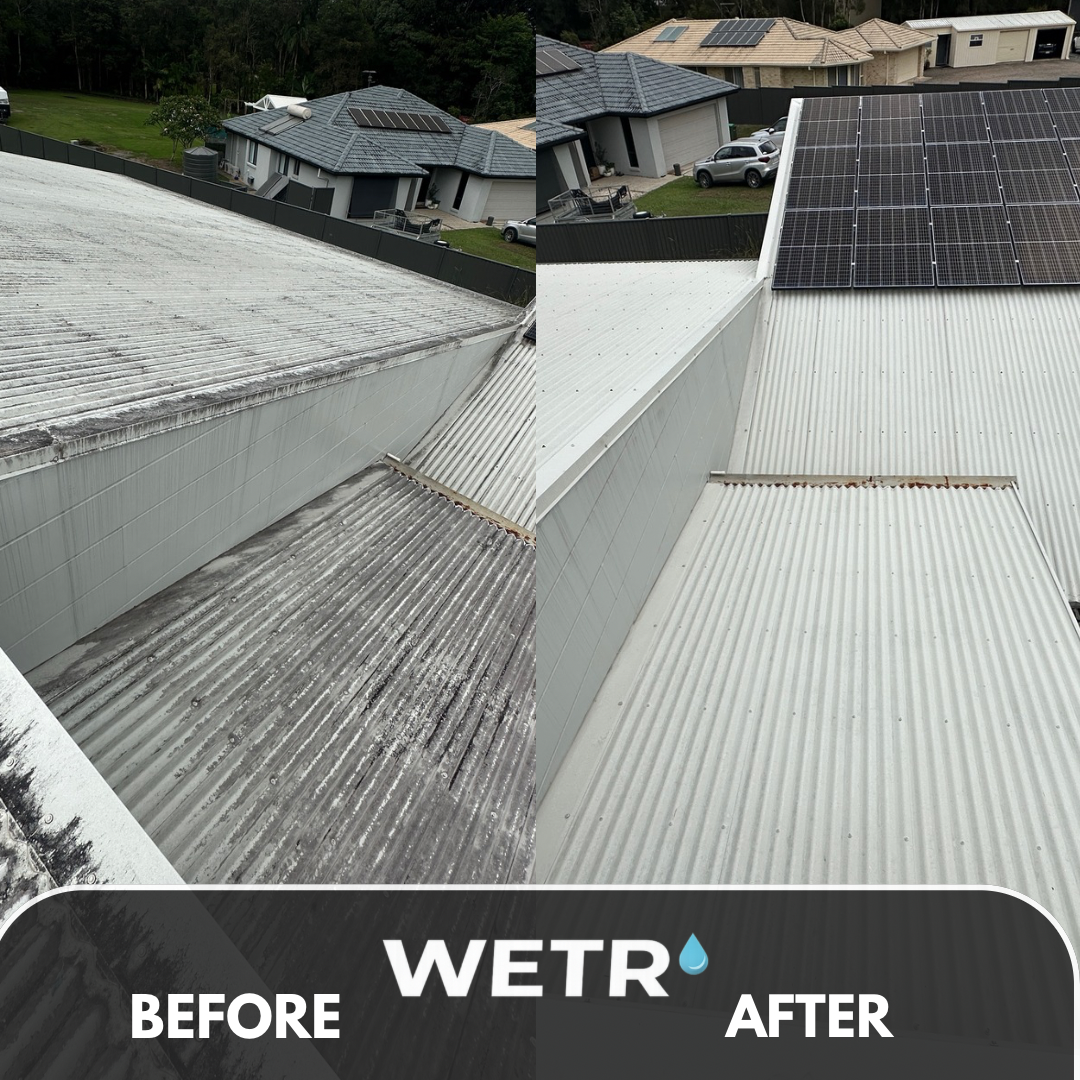
/ The proof
See the difference.
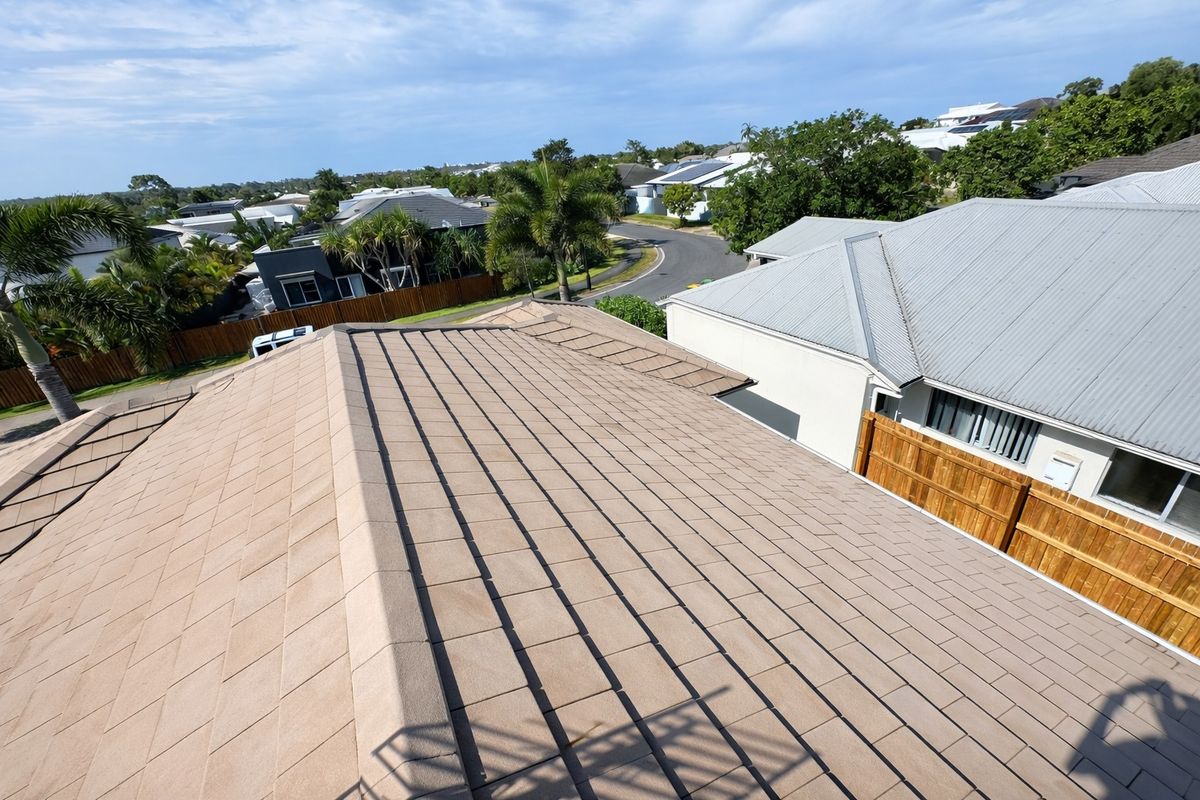
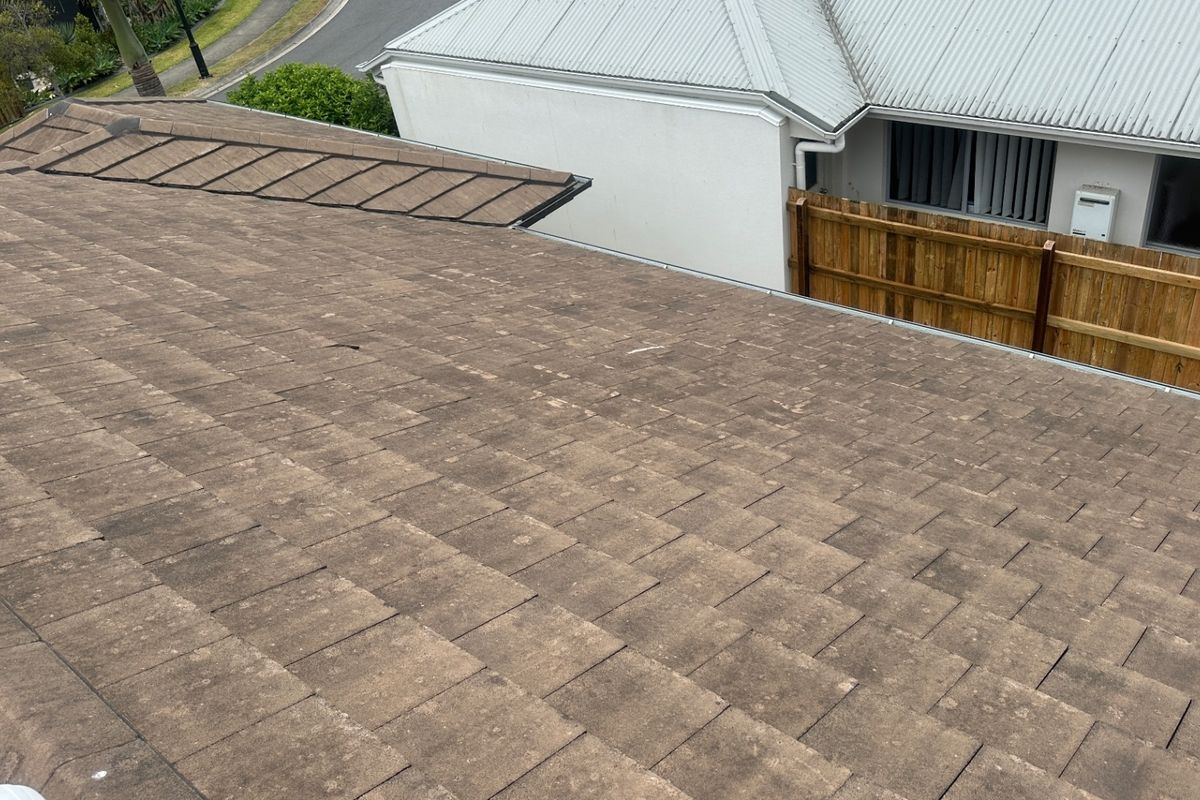
/ Google reviews
What customers say about roof cleaning.
"Very professional and thorough. Roof and driveway came up a treat."
"Roof damage from a previous pressure clean was found by Jake and he offered solutions at no extra cost."
"My neighbour thought he had painted my roof, it came up so good."
/ How it works
How roof cleaning works with WETR.
- 01
Send photos
Use the quote form to send a few photos of the roof from the ground, plus your suburb. That is usually enough for a price range.
- 02
Assess the roof
We check the roof material, condition, pitch and access, anything nearby that needs protecting, such as gardens, pools and solar panels, and whether rainwater tanks and downpipes need to be disconnected or diverted.
- 03
Soft wash treatment
A cleaning solution matched to the roof is applied at low pressure, left to work on the growth, then rinsed where the method calls for it.
- 04
Final walkthrough
We walk the property with you at the end and send a photo report. Treated growth keeps fading over the following weeks.
/ Our method
A gentle roof clean that treats the cause.
Soft wash, not blast
Low pressure with a cleaning solution that kills lichen, mould and algae at the root instead of just rinsing the surface.
Matched to the material
Concrete tile, terracotta and metal roofs each get an approach that suits the surface and its coating.
Property protection
Plants are pre-wet and rinsed, downpipe runoff is managed, and pools, cars and outdoor furniture are considered before work starts.
Owner-led
Jake leads every quote and job, and checks the result with you at the final walkthrough.
/ When you need it
Signs your roof is due for a clean.
Black streaks and dark patches
Common on concrete tile roofs, usually on the shaded faces that stay damp after rain and morning dew.
Lichen and moss
Lichen shows up as grey, white or orange spots, often along ridge caps and on south-facing slopes under trees.
Dull metal sheeting
Colorbond and other metal roofs collect salt, grime and mould that dull the finish, especially closer to the beach.
Debris in valleys
Leaves and sediment collect in roof valleys and around solar panels, holding moisture against the surface.
/ Surface considerations
What to know before cleaning.
- 01
High pressure on tiles can strip surface coatings, lift pointing and drive water under the tiles. Soft washing avoids that risk.
- 02
Metal roofs need a gentle approach that respects the factory coating, so we use low pressure and a suitable solution rather than blasting.
- 03
Results keep improving after the visit. Growth killed by the treatment continues to break down and wash off over a few weeks of weather.
- 04
If we find existing damage such as cracked tiles or tired pointing, we point it out so you can decide what to do next.
/ What we handle
Roofs we clean.
- Concrete tile roofs
- Terracotta tile roofs
- Colorbond and metal roofs
- Ridge caps and valleys
- Patio and carport roofs
- Roofs with solar panels
/ Roof Cleaning FAQs
Straight answers.
/ The detail
Roof cleaning on the Sunshine Coast, explained
Tile and metal roofs
Tile roofs are soft washed with no high pressure. A cleaning solution is applied at low pressure so it can soak into the growth on concrete and terracotta tiles. This protects the tile surface, the pointing on the ridge caps and the seal between the tiles.
Metal roofs, including Colorbond, get a gentler low-pressure method. The aim is to lift grime, salt and mould without wearing the coating. Fixings, flashings and any rust are noted so you know the condition of your roof.
On both types, results improve for a few weeks after treatment. Dead growth keeps loosening and rain helps wash it away, so the roof often looks better a month later than on the day.
Why Sunshine Coast roofs grow lichen and mould so quickly
High rainfall and humidity give lichen, mould and algae ideal conditions. Roofs under trees, or with south-facing slopes that rarely dry out, tend to darken first. That is why you often see one side of a roof in Buderim or Little Mountain looking much worse than the other.
Closer to the beach in Mooloolaba, Coolum Beach and Caloundra, salt air adds a film to metal roofs and works on screws and flashings. In the hinterland, tree cover and damp mornings keep surfaces wet for longer.
Soft washing versus high-pressure roof cleaning
High pressure can make a roof look clean quickly, but it often only removes the surface layer. The roots of lichen and mould stay behind and return. On tiles, strong pressure can also wear the surface and push water where it should not go.
Soft washing works the other way around. The solution does the work, killing the growth so it breaks down. Less force on the roof, and a cleaner result that lasts longer. Read more in our guide on why pressure alone can damage your home.
Roofs with solar panels and gutters
Many Sunshine Coast roofs have solar panels. We work carefully around them and can quote solar panel cleaning and gutter cleaning in the same visit. If the walls need attention too, house washing is often done straight after the roof.
Lichen, mould, algae or oxidation? How to tell
Not every mark on a roof is the same thing, and the difference matters for how it is treated. Black streaks running down the tiles are usually algae, most often Gloeocapsa magma. They tend to show first on the shaded faces of the roof that stay damp after rain and dew.
Lichen looks different. It shows as grey, white or orange crusty spots that grip the tile surface, often along ridge caps and on slopes under trees. Moss is green and spongy, and it holds water in valleys and where tiles overlap.
On Colorbond and other metal roofs, a chalky, dull finish is often oxidation of the coating, known as chalking, rather than dirt or growth. Cleaning can lift the loose film and improve the look, but it cannot reverse coating wear. If that is what we see in your photos or on site, we say so before quoting, so you know what a clean will and will not change.
Rainwater tanks and roof cleaning
Plenty of Sunshine Coast homes, especially in the hinterland, collect roof water in a tank. If yours does, the roof clean needs to be planned around it so treatment runoff does not end up in your water supply.
Before any treatment goes on, the downpipes that feed the tank are disconnected or diverted away from it. They stay off until the roof has had a thorough rinse or a good fall of rain has cleared it. We talk you through when it is fine to reconnect.
Please tell us at enquiry if the property collects roof water, and mention it again if you have more than one tank or a first-flush diverter. It takes a few minutes to plan properly and avoids any surprises on the day. If you are not sure which downpipes run to the tank, we can work that out together when we assess the roof.
How long a roof clean lasts
There is no single answer, because every roof sits in different conditions. Shade, overhanging trees, the direction each face points and how much salt air reaches the roof all affect how quickly growth returns. A roof on an open, sunny block near the beach behaves differently from one in a leafy hinterland street.
Soft washing kills the growth at the root rather than just removing what you can see, so it tends to return more slowly than after a pressure-only clean that leaves the roots behind.
In practice, many owners rebook every few years to keep the roof in good shape, and sooner when the roof sits under trees or stays shaded and damp. Keeping gutters and valleys clear of leaves also helps, because trapped debris holds moisture against the roof. We are happy to suggest a sensible timeframe for your roof once we have seen it.
What affects the price of a roof clean
Every roof is priced on its own details, so we do not publish a flat rate. The main things that shape a roof cleaning price are:
- roof size, pitch and height
- access around the property and onto the roof
- the roof material, such as concrete tile, terracotta or metal
- how heavy the lichen, mould or algae growth is
- solar panels on the roof
- gardens, pools, tanks or anything else that needs protecting
Send a few photos and your suburb and we'll come back with a price range the same day. If the photos do not show enough, we will arrange a time to look at the roof in person.
Bundling helps too. If you also want the gutters, solar panels or walls done, mention it at the start so everything can be quoted and planned as one visit.
Body corporate roofs
For strata and body corporate roofs, see our body corporate page, or read about commercial pressure cleaning on the Sunshine Coast.
We cover every suburb across the region. See our full Sunshine Coast service areas or call 0493 625 357 for a written quote on your address.
Roof cleaning across the Sunshine Coast
WETR works from Noosa down to Pelican Waters, including the hinterland in between. Local pages for the suburbs we visit most:
- Roof cleaning Noosa
- Roof cleaning Noosaville
- Roof cleaning Sunshine Beach
- Roof cleaning Peregian Springs
- Roof cleaning Coolum Beach
- Roof cleaning Maroochydore
- Roof cleaning Buderim
- Roof cleaning Mooloolaba
- Roof cleaning Minyama
- Roof cleaning Buddina
- Roof cleaning Mountain Creek
- Roof cleaning Sippy Downs
- Roof cleaning Little Mountain
- Roof cleaning Caloundra
- Roof cleaning Pelican Waters
Send a photo for a price today.
Tell WETR what needs cleaning and add a few photos. Jake will come back to you with a price range or a time to come and look.
/ Other services
The whole exterior, one trusted local team.
More than one exterior service can be included in the same written quote. Choose only the areas your property needs, with each surface assessed for the appropriate method.
House Washing
Lower-pressure exterior washing for render, weatherboard, fibre cement, painted masonry and brick, with the method matched to the surface.
House washing Sunshine CoastSolar Panel Cleaning
Deionised water and a soft brush remove surface contamination without abrasive cleaning.
Solar panel cleaning Sunshine CoastDriveway Cleaning
Rotary surface cleaning and suitable treatment for plain concrete, exposed aggregate, compatible pavers and pool surrounds.
Driveway cleaning Sunshine CoastGutter Cleaning
Gutter clearing with the agreed scope confirmed in the written quote. Access and downpipe checks are assessed for the property.
Gutter cleaning Sunshine CoastPressure Cleaning
Controlled pressure for robust hard surfaces, lower-pressure soft washing for more vulnerable materials, and deionised water for solar where appropriate.
Pressure cleaning Sunshine CoastSoft Washing
Low pressure and the right solution for render, cladding, brick, eaves, tile roofs and fences.
Soft washing Sunshine CoastWindow Cleaning
Pure water cleaning for glass, frames, sills and balustrades, including salt film on coastal homes.
Window cleaning Sunshine CoastCommercial Pressure Cleaning
Shopfronts, walkways, car parks, building washes, strata and resorts, with SWMS supplied.
Commercial pressure cleaning Sunshine Coast